
We’re currently camped out in a national forest outside the Canadian border on the Washington side. We plan to cross over tomorrow morning. It’s been a wild six days. We’ve made it through three time zones and traveled over 2,500 miles, a crazy number. Trust me, we feel it!
Our goal has been simple… to reach cooler climes as soon as possible. We’re also dodging forest fires, which has delayed our progress. We have had to stay vigilant, watching for road closures and detours. The smoke was so thick last night that we decided to take our third motel room for the trip. The other two nights were because of temperatures over 100 degrees… much too hot for Sam… and us.
Our route took us several hours from one of our favorite wild horse areas near Dugway, Utah, so we decided to take a detour to visit them.
The Onaqui horse herd always surprises. We drove in from Delta and only saw a few horses along the way. As we neared the cutoff, I figured the horses would be elusive. It was the weekend, when Utah’s ATV activity is at its height, which always forces the horses up into the mountains.
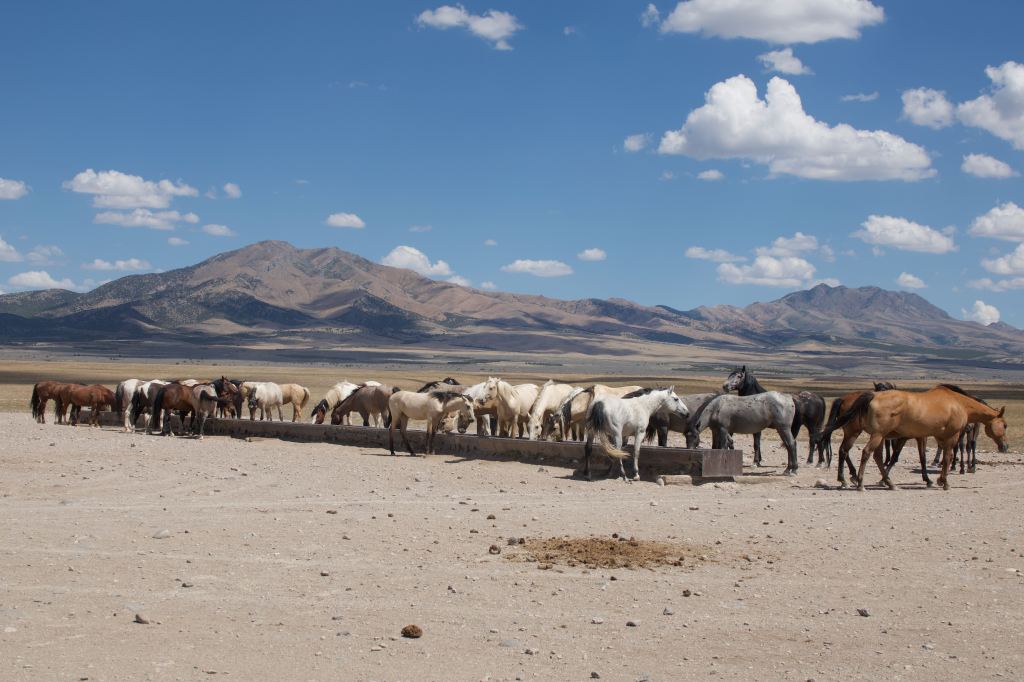
Just as we were about to give up, we saw a dust cloud in the distance. Dozens upon dozens of horses were stampeding towards the water trough. David quickly backed up, giving us a quick view of the onslaught before we made our way to the water trough. I’ve always been fascinated because the horses always seem to run when it’s time for water.
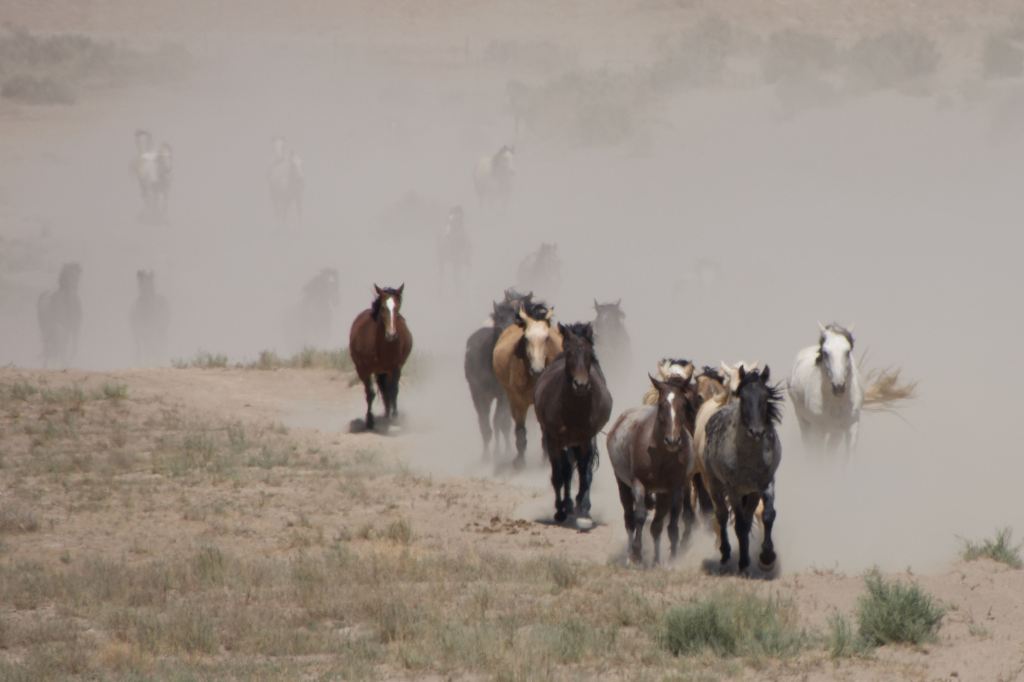
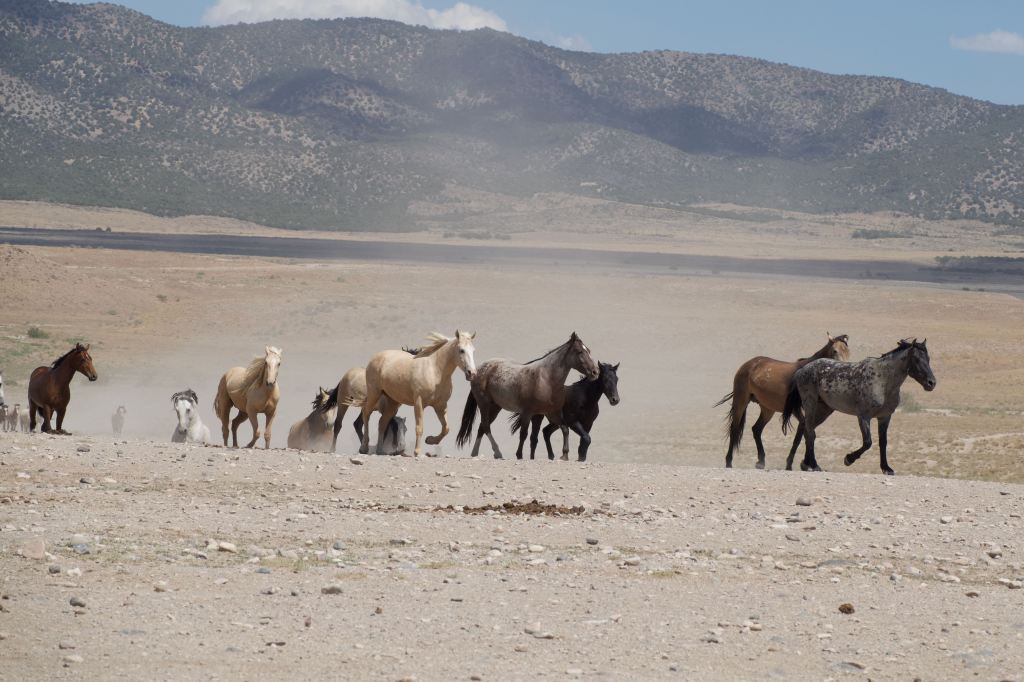
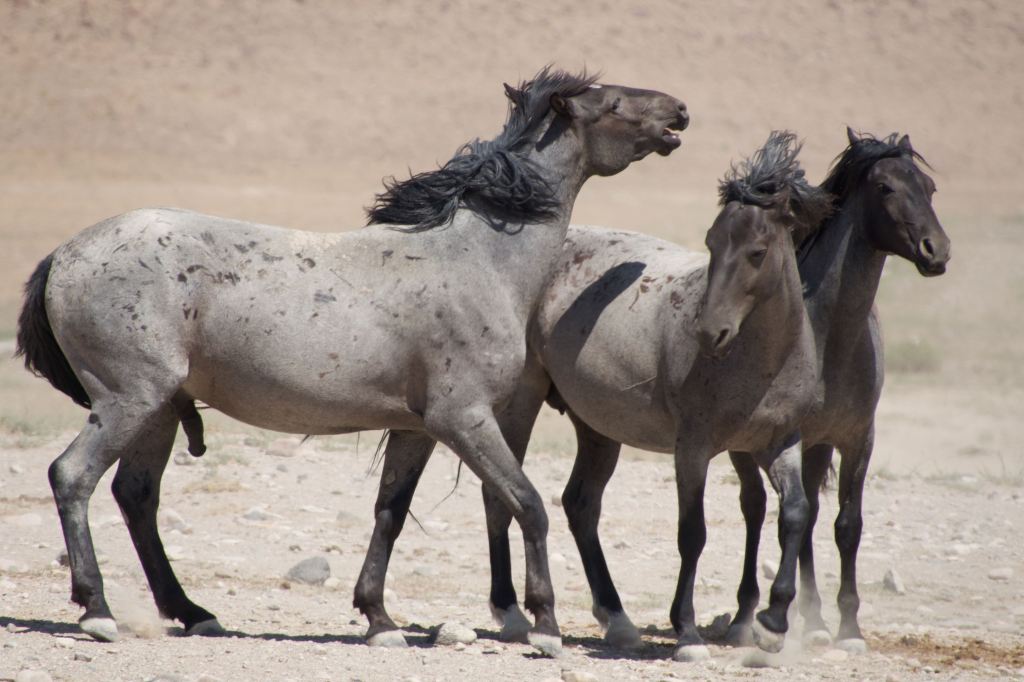
The beauty of the Onaqui horses is that unlike most herds, several bands exist within the community. Most bands consist of a stallion, possibly a lesser stallion, and a harem of mares and foals. Most of the time the band numbers less than a dozen horses. The Onaqui, however, because of their size and social make up, are very dynamic. With several stallion band leaders vying together, there is always the possibility of drama. As an example, we have followed this paint for years. He seems to always be causing a ruckus. I named him Scarface because of the scars he proudly wears from his many battles.
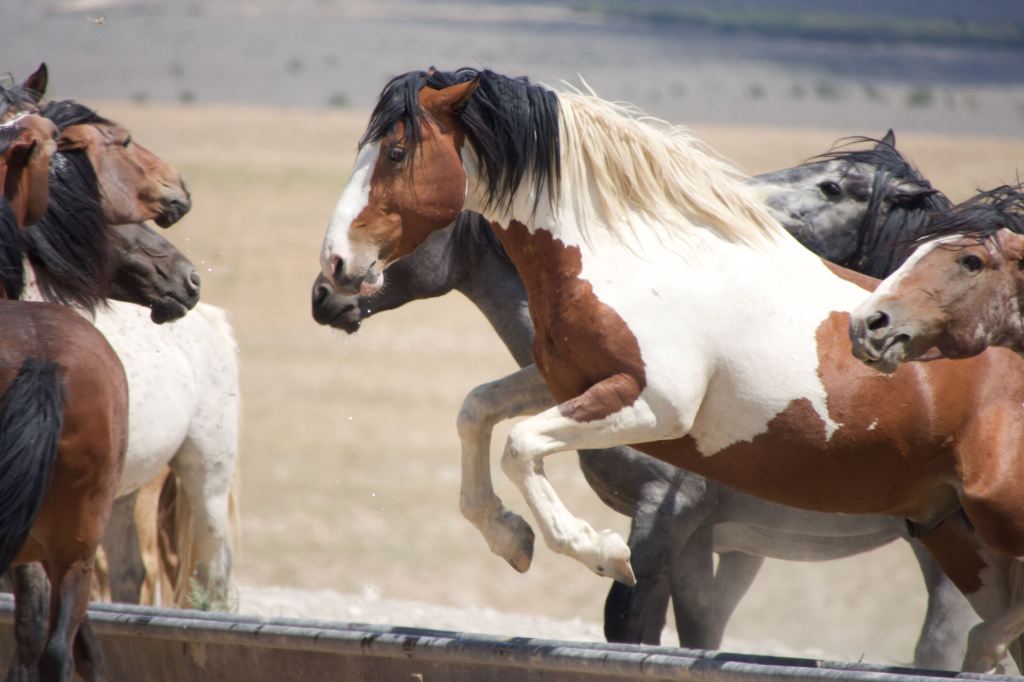
There were only two foals in the group, when there should have been many more. Unfortunately, the birth control the BLM management is administering to the mares is often permanent rather than wearing off after a season or two. The question now is whether wild horses can survive with such a dismal replacement birth rate.
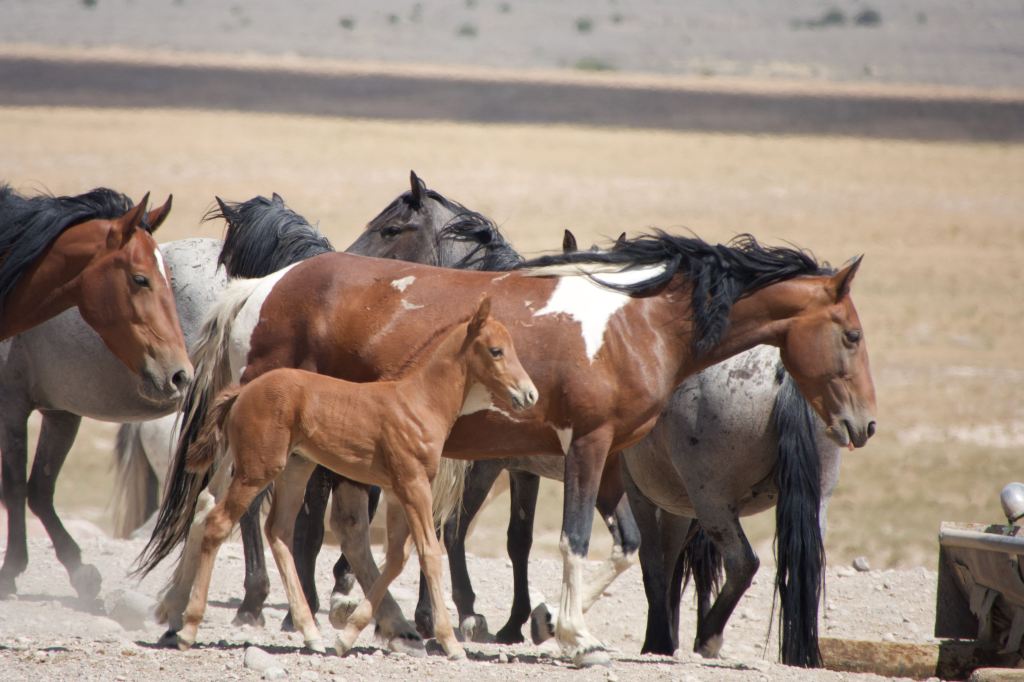
We watched as several other bands came in waves to join us at the water trough. Finally, as the horses had their fill and began to wander off, we got back in the truck to make our way to our favorite camp spot. We were shocked to see the truck’s temperature reading was 116 degrees in the sun. As we drove onward, the temperature dropped only to 111 degrees. We simply couldn’t leave Sam in that kind of heat, not with her double fur coat. It certainly wouldn’t have been pleasant for us either. So we opted to drive to Tooele for a motel room.
Tomorrow we make our way towards Idaho and, hopefully, cooler weather.
 Welcome to Ruffingitx3.blog!
Leave a comment